Beyond the map
One place can't be marked on any map of the Earth: the Sun itself, which SOHO has watched for thirty years from 1.5 million kilometres away.
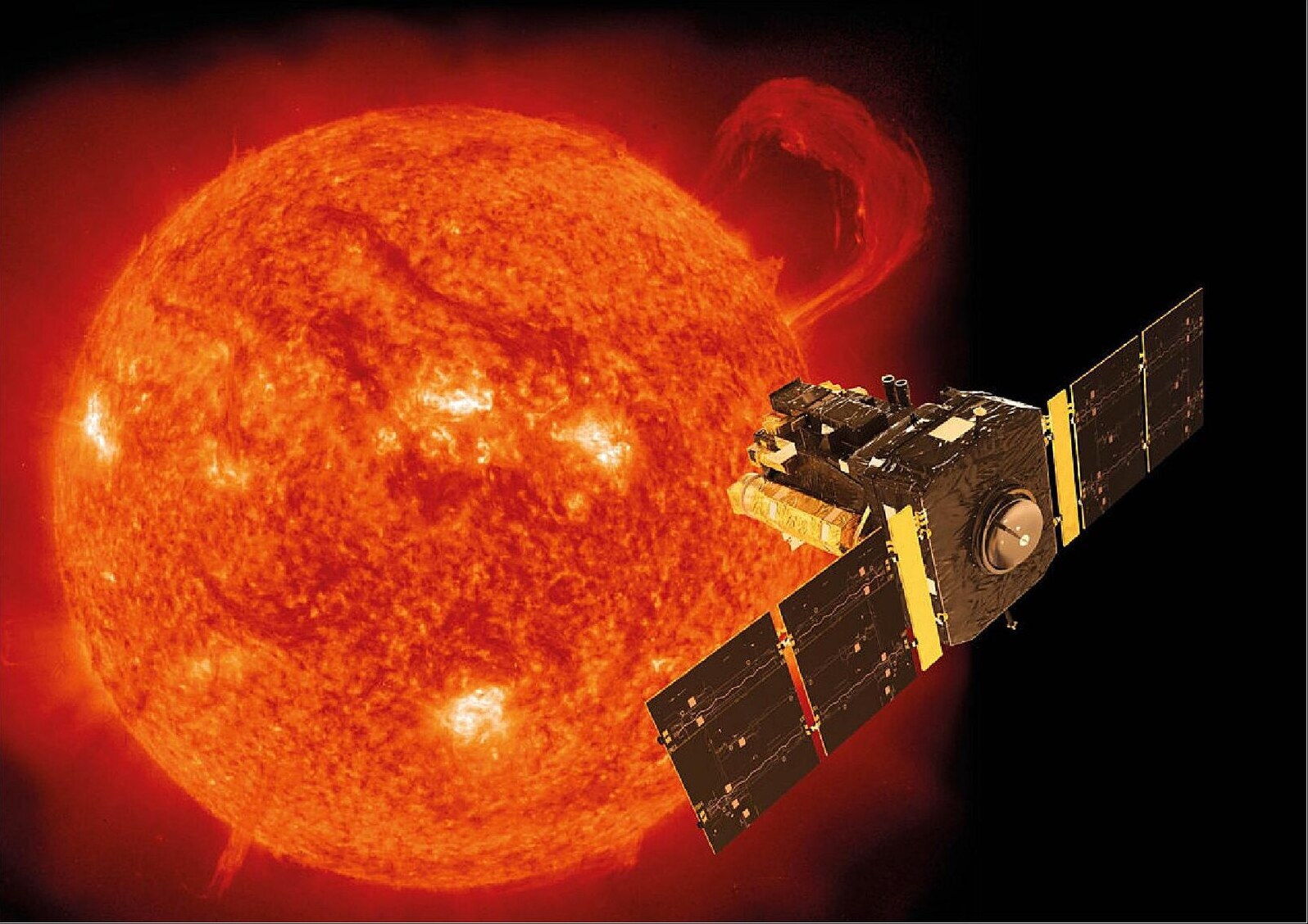
A short visual of SOHO. · Watch on YouTube ↗
Where the work happened
For a career that reached the Sun and the inside of an atom, the map of Brian's working life began surprisingly close to home — and then quietly stretched across the world. ← back to the story
From a drawing office in Oxfordshire, his work travelled to a Russian crystal plant, a launch pad in Florida, and — 1.5 million kilometres on — the Sun itself.
Tip: click a place below to fly there on the map.
Where it began. Born in 1947, schooled at the Lennard Secondary School, and apprenticed as a Fitter & Turner at Murex in Rainham.
His working home for roughly thirty-six years — the synchrotron, the drawing office, the SOHO/CDS door mechanism and the CMS crystals all began here.
On the French–Swiss border: the CMS and ATLAS detectors on the Large Hadron Collider, and the liquid-helium pumps Brian assembled at Prévessin in 1988.
The H1 experiment on the HERA collider in northern Germany — the most likely home of his cryogenic-pump work.
Where the CMS crystals were grown. Brian worked with the Russian team who cut and checked the lead-tungstate crystals — and, as the photo shows, shared more than a few meals with them.
Two of his instruments left Earth from here: SOHO, carrying his CDS door mechanism, on an Atlas rocket on 2 December 1995 — and, four years earlier, his UARS instrument aboard the Space Shuttle Discovery (15 September 1991). You can watch the SOHO launch below.
One place can't be marked on any map of the Earth: the Sun itself, which SOHO has watched for thirty years from 1.5 million kilometres away.
A short visual of SOHO. · Watch on YouTube ↗
A short film of the launch, and an explainer of the mission Brian helped build.
SOHO launches from Cape Canaveral, 2 December 1995. NASA/ESA · Watch on YouTube ↗
What SOHO is, and what it has seen. · Watch on YouTube ↗