A powers-of-ten descent
How far his
drawings reached.
Brian Smith spent his life at a drawing board in Oxfordshire. From it, his engineering reached the Sun — a hundred and fifty million kilometres away — and the Higgs boson, a billionth of a billionth of a metre across. Scroll down, and fall from one to the other.
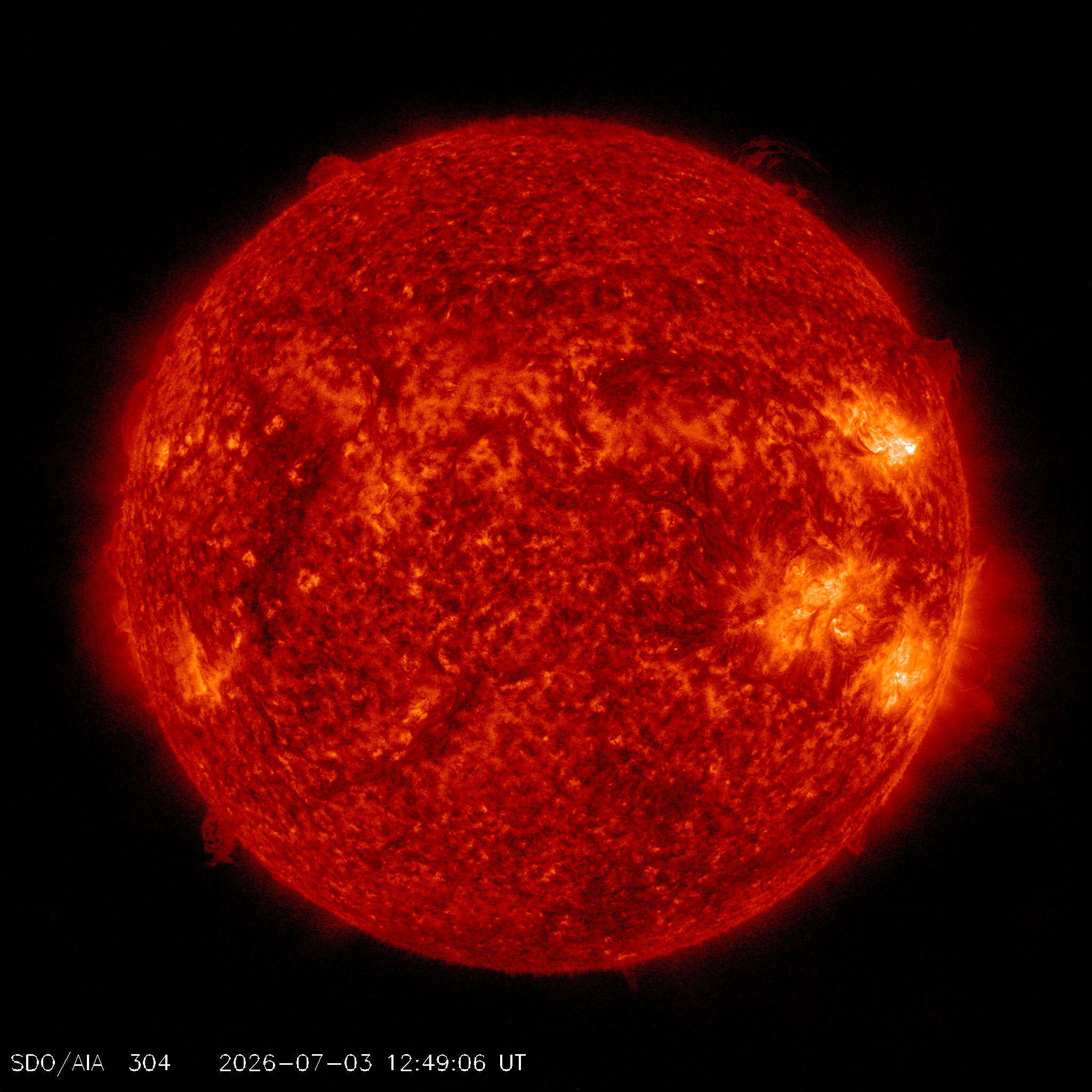
The star, and the gulf we watch it across
A hundred and fifty million kilometres away burns the Sun. To study it, we sent an observatory — SOHO — and on that observatory rode a door mechanism Brian designed. His work begins at the largest scale there is.
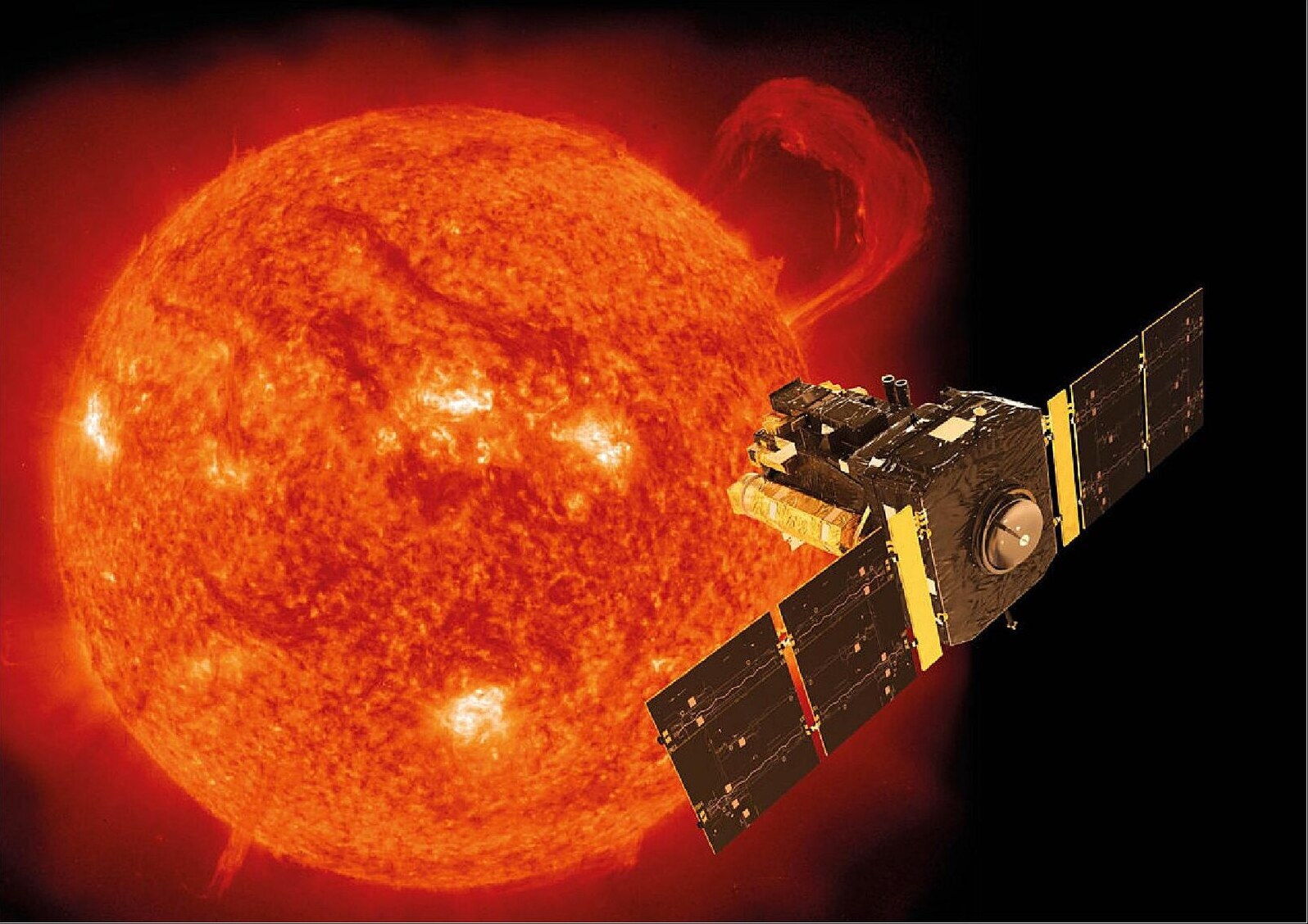
A million miles from home
SOHO holds its station at the L1 point, 1.5 million kilometres out, with an unbroken view of the Sun. Brian's aperture doors open and close here, in the cold and the glare, and have done for thirty years. ESA/NASA
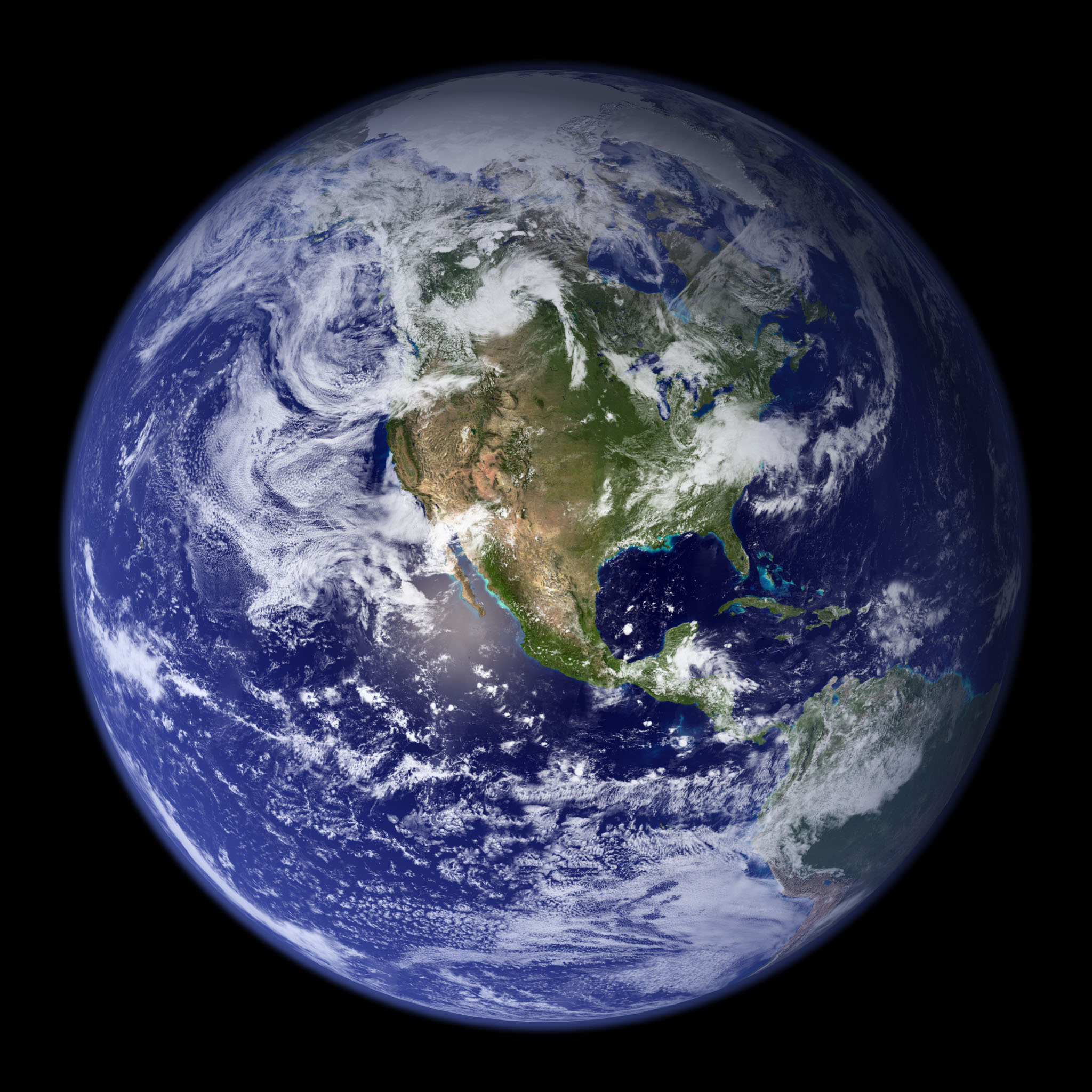
Home — a pale dot in the data
Twelve thousand kilometres across. Somewhere on it, in a field in Oxfordshire, sits the drawing office where all of this was imagined. From here on, we fall inward.
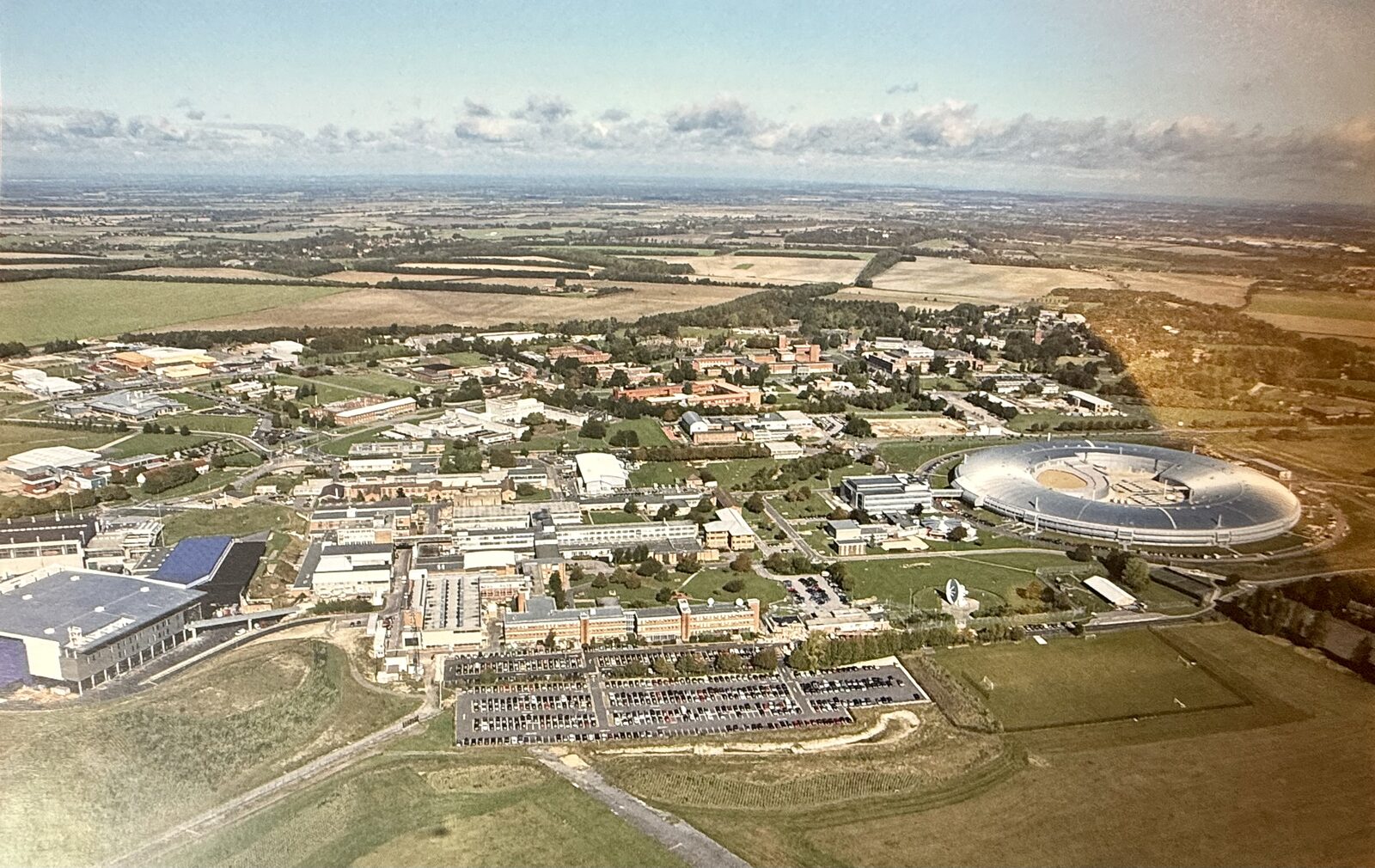
A field in England, a ring in Geneva
The Rutherford Appleton Laboratory at Harwell — a campus a few kilometres across — and, the same scale away near Geneva, the 27-kilometre ring of the Large Hadron Collider. Two of Brian's worlds, both measured in kilometres.
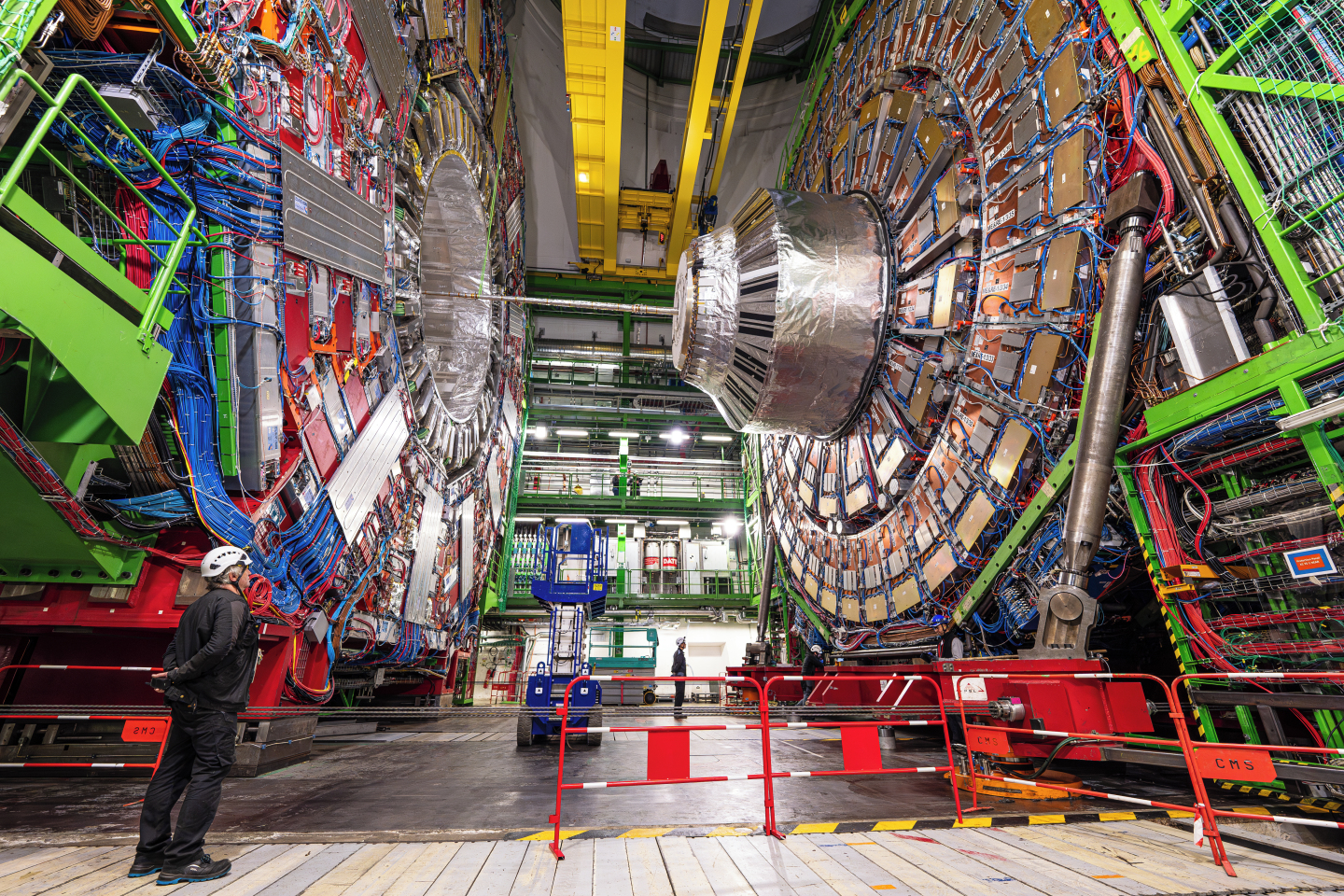
A cathedral of a machine
Twenty-one metres long and fifteen across, buried a hundred metres down: the CMS detector, built to catch the Higgs. Lining its heart is a wall of crystals — and Brian is the man who made them buildable.

And here, at human scale
Right in the middle of everything, between the vast and the invisible, stands one engineer — whose simple designs made both ends work.
Everything above this point, and everything below it, was reached by his drawings.
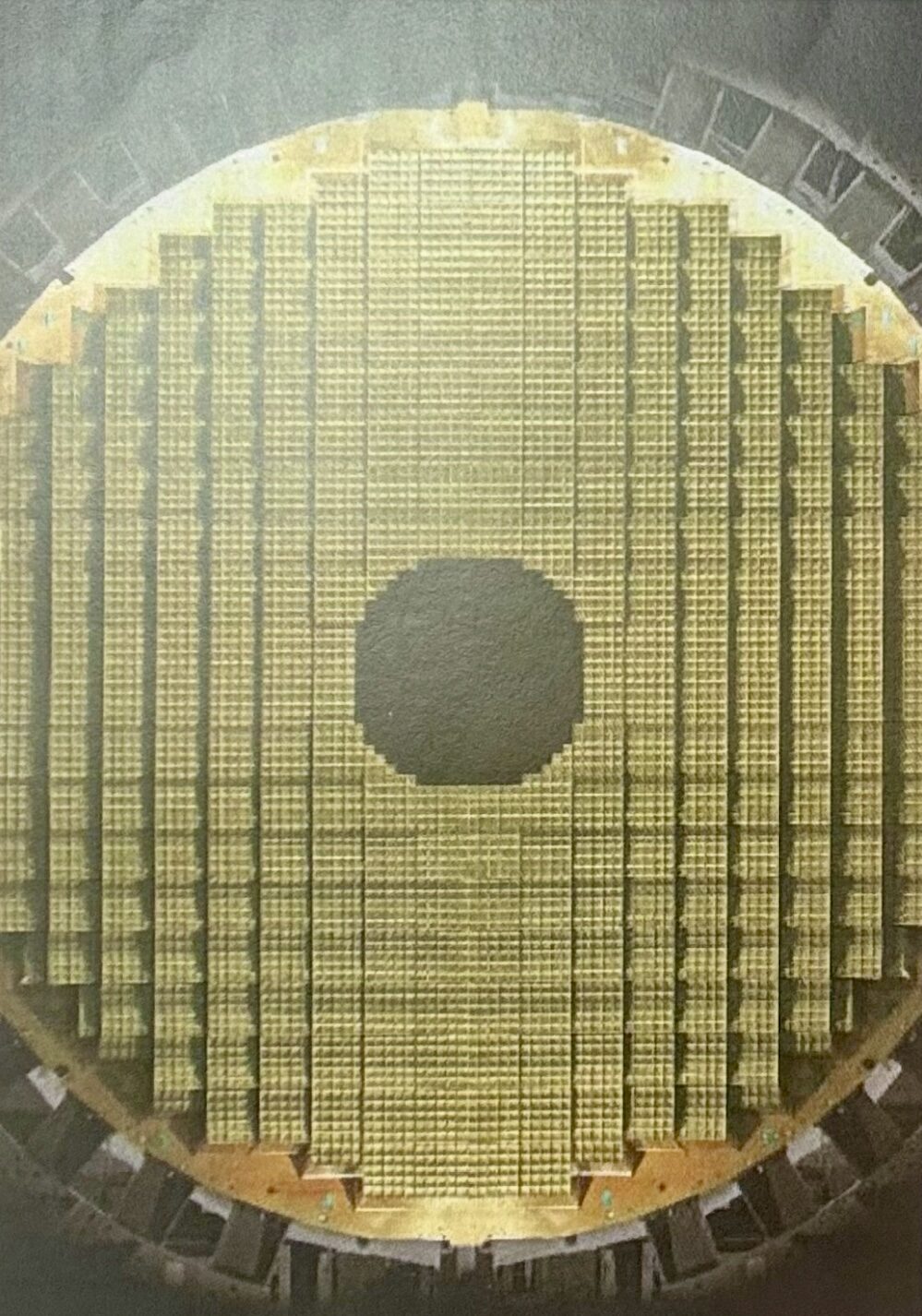
Twenty-three centimetres of glass-clear lead
A single lead-tungstate crystal, the length of your hand. There are around 75,000 of them, and Brian's idea was to make every one identical — "make every crystal the same." Below here, we leave the human world behind.
Everything is built from these
The crystal, the detector, the man, the Sun — all of it is atoms, mostly empty space, with a tiny dense heart at the centre. So we keep falling, into that heart.
The dense heart of matter
A knot of protons and neutrons. Almost all an atom's mass lives here, in almost none of its space.
What the collider slams together
Three quarks bound by the strong force. The LHC accelerates protons to almost the speed of light and crashes them head-on — reaching energies, and distances, smaller still.
Where the Higgs reveals itself
Here, in a flash the crystals were built to catch, the Higgs field wobbles into being. This is the far end of Brian's reach.
From the Sun to the quantum, and a man at a drawing board touched both ends.← Back to Brian's story